The world’s largest problems came from choices made by people in specific governance settings, often without visibility and in breach of duties owed to others.
We are doing something about that.
Fiduciary governance
Cross-sector dialogue
Tailored programmes
Tools & Frameworks
Governance Failures Drive Global Risks

Hughes Hall, Cambridge – home of Cambridge Governance Labs
Our research offers a framework to see large global problems in a different light. Focusing on subtle underlying causes – situated in the governance space – instead of on dramatic symptoms – empowers everyone to see with sufficient clarity to create solutions.
How monopoly pricing impacts human health
The governance of mining
Protection of the polar ice shield and ethics of climate change
AI as a catalyst to address flaws in our political, economic and legal systems
Programmes to promote governance awareness for young people
Confronting short-term decisions that prejudice future generations
Practical tools that provide real-time feedback to decision-makers
"Most governance problems are too connected to be solved by any single institution. Better solutions come from shared thinking."
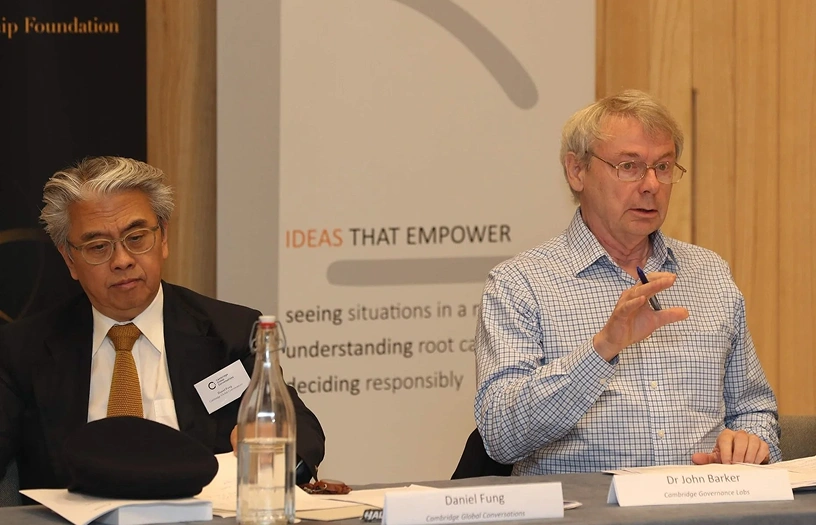
Cambridge Global Conversations – Daniel Fung & Dr John Barker
Multi-Disciplinary Thinking Produces Better Solutions
Some problems are too big for any one organization or discipline to solve alone. We bring the right people into the room – from researchers and practitioners to policymakers and community voices – to think through specific governance challenges together. Different perspectives on a shared purpose.
01
What determines the cost of life-saving drugs - who benefits and who pays with their lives? Focus on abuse of intellectual property.
When pricing decisions are based on monopoly positions unconstrained by competitive forces, people die from conditions that are entirely treatable.
We have engaged with health experts, manufacturers, lawyers and policymakers to examine regulatory capture and other governance deficiencies to find solutions that put citizens first.
02
Understanding climate change through the lens of ethical decision-making. How the climate crisis is a study in economies locked in overdrive by those extracting extreme benefits that others pay for.
Who is responsible, who pays and whether the true cost dwarfs the benefits - these are governance questions, not just scientific ones. We bring together cross-sector voices to build the ethical framework that turns climate commitments into accountable decisions.
03
What happens when public decisions are based on instinct or incomplete information? We develop tools and frameworks that give decision-makers the right information at the moment they need it most.
Opinion is not evidence. Political pressure is not a framework. Yet most public decisions are shaped by both. The consequences - wasted public money, failed policies, citizens left without services - are paid by people who had no say in the decision.
We believe decision-makers deserve better tools. Not more data for its own sake, but the right information, presented clearly, at the moment a decision has to be made. That is what we are building.
04
What does the next generation know about the power their constitution gives them? Citizens who understand their rights are harder to mislead and manipulate.
What does the next generation know about the power their constitution gives them? Citizens who understand their rights are harder to mislead and manipulate.
05
How do you protect something that belongs to everyone? We joined COP26 in Glasgow to support efforts to protect Arctic ice - one of the planet's most critical climate regulators.
How do you protect something that belongs to everyone? We joined COP26 in Glasgow to support efforts to protect Arctic ice - one of the planet's most critical climate regulators.
06
Who is the real threat - humans or AI? Our greatest global risks predate artificial intelligence. The question is whether AI can be directed to drive better decisions rather than entrench the ones already failing us.
Who is the real threat - humans or AI? Our greatest global risks predate artificial intelligence. The question is whether AI can be directed to drive better decisions rather than entrench the ones already failing us.
"Good decisions can be taught. We give decision-makers the frameworks to make them."
Empowering Decision-Makers to Discharge Their Duties
We train executives to make better decisions on behalf of others – no leadership theory, but the practical skills of accountable, evidence-base decision-making in real institutional settings
Our programmes are built around the challenges participants are already facing. They leave with frameworks they can use immediately, adapted their own context and sector.
When you make decisions on behalf of others – as a minister, director, judge or official – you carry legal duties that most people in authority were never explicitly taught.
This course covers what those duties are, who they are owed to and what it means in practice to put the interests of the people you serve above your own. Participants leave with a clear framework for decision-making that is accountable, transparent and legally sound.
Good governance starts with the person making the decision. This course asks a simple but demanding question: what do you stand for, and does how you lead reflect it?
Working through real ethical dilemmas, participants examine their own values, develop habits of honest decision-making and learn to build institutional cultures where people feel safe to raise concerns and expect to be treated fairly.
Most decisions made by people in authority can be challenged – legally, publicly or both.
This course focuses on how to get decisions right the first time: understanding the rules of procedural fairness, knowing the grounds on which decisions are overturned and building internal processes that catch problems before they become disputes. The goal is fewer costly mistakes and greater public trust.
Conflict handled late is expensive – in time, money and relationships. This course gives participants the skills to recognise tension early, de-escalate it and resolve disputes without litigation.
Drawing on mediation, negotiation and arbitration frameworks, it is practical and hands-on, built around the kinds of conflicts participants are already managing in their own institutions.
When those in authority bend rules to suit themselves, it is ordinary people who pay the price. This course examines what the rule of law actually demands of decision-makers – not as an abstract principle, but as a daily discipline.
Participants explore how laws and institutions can be used to protect people rather than power, what happens to governance when legal safeguards are eroded and how to make decisions that hold up to scrutiny – even under pressure.
Nigerian government officials and Automobile Industry leaders trained on Governing Effectively: Oversight, Accountability and Decision-Making in Practice.
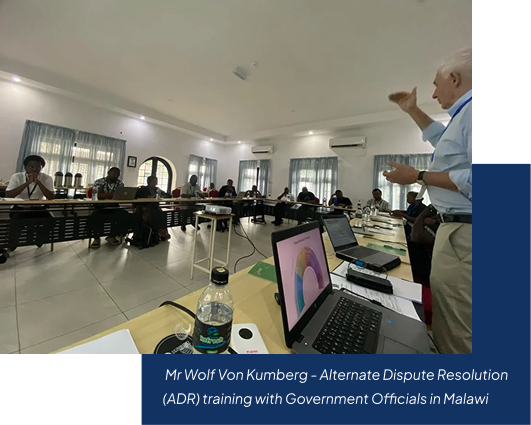
Alternate Dispute Resolution (ADR) training.
HR officials trained on ethics and governance.
Director Generals & Principal Secretaries on Personal Ethics, Administrative Justice & Fiduciary Leadership.
Leaders trained on Personal Ethics.
Transformer programme on Personal Ethics.
Making Governance Risks Visible to Everyone
When the true cost of bad decisions takes years to become evident, it is difficult to course correct in
real time.
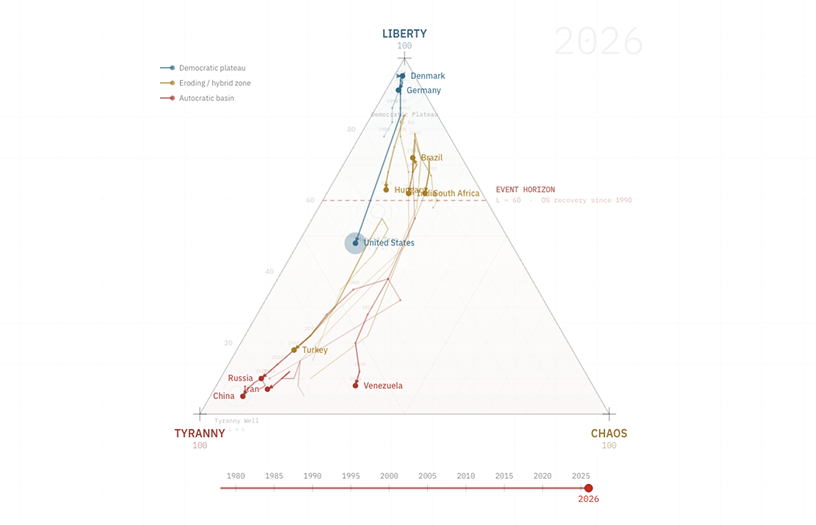
We are building practical tools that analyse consequences of day-to-day decisions based on past experience to make true costs known at the point of decision.
Governance sounds like a topic for experts. It isn’t. Every time a hospital runs out of medicine, a court case drags on for years, a public contract goes to the wrong person or a community is left behind by a decision made far away – that is governance issue. It affects everyone.
Our podcast puts those decisions under the microscope. We talk to the people who made them, challenged them or lived with their consequences. No jargon, no abstractions – just honest conversations about how power is exercised and what happens when it isn’t exercised well.
Season 1 - in production
Get notified when we launch